


What is the difference between a hearing aid and an amplifier?
Hearing aids are sophisticated devices that receive sound through their microphones, use a microchip to categorise and process sound, and produce adjusted sound that is tailored exactly to the needs of the person with hearing loss. Because of this, they need to be accurately programmed, adjusted and verified by a professional who is educated in the field of Audiology. Real hearing aids can also detect information about the environment, and through their dual microphones, are also designed to assist people to hear more speech information in difficult environments. Amplifiers also receive sound through a microphone, but since they have no tailored settings, they simply make all sounds louder. No adjustment can be made, so these can be used without the intervention of an audiologist to set them. However, hearing safety is a concern and so, if you choose to consider an amplifier, it is still a good idea to have a hearing assessment beforehand to ensure that you are not missing any important diagnosis. Also, audiologists can use real ear measurement to assess the sound coming OUT of these devices, which can help to keep you safe and not cause harmful exposure to excess sound.
Have Questions?
As one of our Audiologists:

What is the difference between an Audiologist and an Ear, Nose and Throat (ENT) Specialist?
Both Audiologists and ENTs care deeply about people being able to hear. So, what is the difference in their focus?
ENTs are medical doctors with a speciality in the anatomy of the ear, nose, and throat, and are concerned with treating patients who have medically solvable problems of these structures. ENTs can prescribe medication for infections or allergies. They can also intervene surgically when an ear’s structure changes (for example, when fluid or a growth is present), when structure needs to be realigned (such as when trauma interrupts the chain of bones in the middle ear), or when cells need to be bypassed (such as when a person has a severe cochlea hearing loss and needs a cochlear implant).
Audiologists hold an honours, masters, or doctoral degree, specialising in the function of the hearing and balance system. They are also registered with the Health Professions Council of South Africa, but do not prescribe medication. Audiologists are involved in the diagnosis of hearing problems, balance or dizziness, or other deficits of processing in the hearing or balance system. ENTs often need an audiologist’s results in order to decide how to manage an anatomical problem. If a problem cannot be solved by medicine or surgery, your Audiologist can prescribe and fit bespoke digital hearing aids, or provide therapy for communication disorders, balance or dizziness difficulties, or abnormal sensations of sound such as tinnitus. The aim of every audiologist is to help children and adults attain their best quality of life.
Visit one of our Reconnect Audiologists TODAY! Click here to find your closest professional: www.reconnectnetwork.co.za/find-an-audiologist
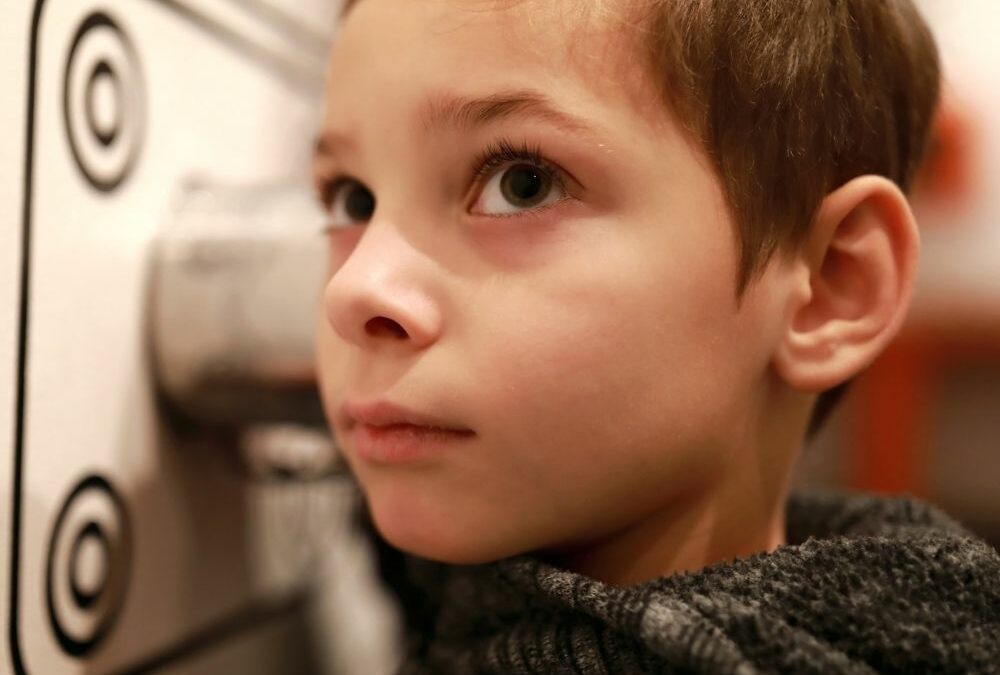
‘My child does not listen’ – but can they hear you?
This is the podcast made by Elana Afrika, Natalie Buttress, Bronwyn Dekker, specifically for World Hearing Day 2021. This year the global call for action is to address hearing loss and ear diseases across the life course. Hearing care for ALL.
Thank you once again for recording with Elana Afrika-Bredenkamp for Parent + Baby Brunch on Baby Brunch the Parenting series podcast.
https://www.babybrunch.co.za/podcast
Here is the direct link:
Facebook:/babybrunchsa
Instagram: @babybrunchsa
Twitter: @BabyBrunchSA
Handle: @BabyBrunchSA

The Lost Art of Listening
During this time of lockdown, we are spending far more time with our family members and fellow householders than we have ever before. We have often bemoaned the fact that we don’t have enough time to spend with our families – and now we have. And it is harder than we thought.
These challenges result because we now have to be more present and attentive and interactive than on a normal day where our interaction at home may be limited to “What time must I fetch the kids?”, “What do you want for supper?” and “I am so tired, I think I am just going chill in front of the TV”.
For many of us, our daily work demands are such that we are expected to talk all the time, promoting our ideas, putting forward our personal brand, and often not taking time to listen. But what we are realizing in this time that we are spending in a different way of life is that we also need to listen and listen intentionally to build and maintain our relationships.
“The more we talk, the less we hear. We are lonelier and more fearful when we stop listening.” Melanie Reid (Journalist).
We seldom listen carefully and with intent to what people have to say. We are so busy planning our response that we don’t really listen to the words and the intent of our fellow communicators. But if we think about, listening is more valuable than speaking as it is only by listening that we engage, understand, connect, empathise and develop as human beings.
It is in listening that children first learn to speak, it is in listening that we learn to make sense of our world, it is in listening that we first learn to develop a love of story and then to read, it is in listening that we learn songs and poems and prayers, and it is in listening that we build relationships, a skill fundamental to any successful relationship.
As an audiologist, hearing is my work, but listening is my passion. For what use is the ability to hear if we do not use it to listen and how limiting is it if we cannot hear and therefore not listen? Over the next few weeks, I will continue to share some thoughts and suggestions regarding listening and how we can become more effective in this area.
“Nature hath given men one tongue but two ears, that we may hear from others twice as much as we speak.” Epictetus (Greek Philospher).
Hearing sound involves the simple detection of auditory input at the level of the ear. The brain simply detects the presence of sound.
Auditory processing involves multiple tasks that occur at many different levels in the pathway from the ear to the areas of the brain that understand what sound means.
Auditory processing therefore, is a complex pattern detection process that uses information about pitch; duration; direction; differentiation; memory; association and language, in order to understand the great complexity of information contained in an acoustic message.
Hearing loss can impair auditory processing by not giving the brain enough information, but some people with auditory processing problems may have normal hearing, yet still have difficulty processing information at higher points along the pathway.
Need an Audiologist?: